
Tenacious ME
Tackling disabling autoimmune disease with obstinance and humor.
Why I’m A #Rheumchampion

From the moment I first received my diagnosis, there has been this shining ray of hope. I recall one of my first thoughts was how fortunate am I? To have such a complicated and physically challenging disease in the age of information, in a time of great leaps forward in science and technology. The things we have figured out how to get done, the problems we have solved, gave me immediate hope for the future. As a lifelong science nerd with a BS, I knew just how much we have cracked open in the last few decades and can see some truly life-changing technology ahead. Science drives us forward. When done well, it gives us incredible insight. Our understanding of the human body is always growing and changing. Surprising links lead to better therapies and more successful patient outcomes. My great-grandmother’s experience with RA will not be my own experience.
Naturally, when I was contacted by the Rheumatology Research Foundation about joining their effort to contribute to pushing that science forward while advocating for and spreading awareness about rheumatic conditions as a Rheum Champion, I was an immediate YES! A quick look at the work they support was all I needed to say, ‘count me in, what can I do?’ The answer was, keep doing what you are doing, advocate, educate, share.

Two years later I’m excited to have been selected to serve on the Impact Advisory Council and be invited to spend some time learning more about the exciting science being done by recent award recipients at the upcoming investigators meeting. I’m excited about the opportunity to learn and share. About all the sparks of hope I’m sure I will get to see. Excited to meet some of my fellow rheum champions and share space with people who come from a place of passion and deep understanding.
I’m a bit less excited about the travel part. This is when living several hours north of the civilized world kind of stinks. Travel to places south of the end of the world? A long and often complex process. Due to the surprising fact that you apparently can’t get there from here on a Tuesday from the closest airport…we had to double our driving time. We also decided to tack an overnight stay to the start of the journey to avoid starting out the trip with a midnight drive to the airport. I need to be alert and alive for this trip, not recovering from pushing the limits to get there.
Staying near the airport, going down the day before the commitments I must be functional for, leaving room in my schedule for some movement or some rest when I arrive, will all help me get off to a good start and hopefully avoid a crash into the fog while I am at the conference. Making sure I keep on top of my normal self-care routines will also help make sure I’m functioning at my best for the trip. The better I feel, the more engaged my brain is, rather important when trying to learn about new things.
Want to know more about the Rheumatoid Research Foundation? Pop on over to the Rheum Lab to explore the work they do and take a peek at some of the research their awards have supported. Interested in becoming a #Rheumchampion yourself? Click here to learn more.
Like what you read? Show me some love, give it a like, share with a friend.

Traveling With RA

Making any plans when you have an unpredictable passenger like rheumatoid arthritis along for the ride can be daunting. How will it behave? Will it be quiet and calm or roaring around lighting you on fire? In other words, is the trip going to be a fun time or a torture session far from the comforts of home? While most of us have found being certain our symptoms will be in check any given day of the month is akin to fortune telling, it is certainly possible to make a plan that leaves room for the bad days in case they sneak into the suitcase.

- Timing is everything. This one covers a lot of ground. What time of year, where in your medication cycle you are, how many days you have to be on the move, how long you can spend recovering at your destination, all of these things can either help you or hurt you. Planning ahead can help you set yourself up for good days. Give yourself a bit of extra time whenever possible. If it turns out you didn’t need that recovery day after flying, you will get to enjoy more time at your destination. If you do need a day of recovery before you set out for the next adventure, you will be grateful you had the foresight to plan ahead.
- Don’t over-schedule. It can be tempting, especially when visiting a new destination, to try to do everything you would like to do while you are there. The fact is, unless you are headed to the most boring destination on the planet, it is unlikely anyone could do EVERYTHING the area offers in a short vacation. Anyone would have to pick and choose. Anyone with chronic illness will have to make those considerations rather carefully. It can be helpful to make a list and prioritize. Make a star next to the things you’d be most disappointed to miss out on and make a plan that allows you to be ready to enjoy them.
- Be flexible. Due to the unpredictable and inflexible nature or RA, being flexible with your plans and expectations can make the difference between a relaxing vacation and a torture session far from home. If you can avoid setting your itinerary in stone, do that. You may not be ready to hike Thursday at 2, but if you allow yourself the space, you may find you are up to it Friday morning. A flexible schedule allows you to tackle the things on that wish list as you feel up to them.
- Plan downtime. You likely have a list of things in your mind that you know take a large mental or physical toll on you. Often getting to where you vacation will be on that list. Planning an evening of rest instead of jogging off the plane and out to paint the town will leave you more energy when you do get out there to explore. Resist the urge to hit the ground running. Chances are you will enjoy the experience more that way.
- Rest. It may feel like a major waste of time to spend vacation time sleeping or lounging around by the pool, after all there is so much to see and so little time. Allowing yourself downtime to recover as you need to, will make the time you spend actually doing things much more enjoyable. Sticking to some sort of sleep routine will surely give you more energy to enjoy the trip. There is no sense in dragging yourself around the world too exhausted to enjoy the sights. First rule of vacation, this is supposed to be fun and relaxing, if it isn’t, you’re likely pushing too hard.
While it isn’t possible to take a vacation without bringing your cranky body along for the trip, a little proper planning and a bit of flexibility will help keep it and you happy while you explore. For more tips on travel, check out these other tenacious travel articles:
Making Plans with Rheumatoid Arthritis
Planning a Vacation from Rheumatoid Arthritis
Vacationing with Autoimmune Disease- 8 Tips for Avoiding Coronavirus and Other Plagues
Curious about the trip I am planning? Pop on over and join my patreon to see what I’m up to.
Like what you read? Show me some love, give it a like, share with a friend.

RA Unedited #4
Here I am again this morning, standing at the intersection of overindulgence and overdoing, a little neighborhood known as massive pain. The sad part is, as always, knowing I did this to myself. Not the disease that cause the symptoms to flair mind you, I won’t take responsibility for the entire shitshow, but the doing of the things I am well aware bring on the pain? Yeah, that was me, I did that. How might you ask? Easier than you’d think.
Now that I am here, I can see every wrong turn I made to get here and everyone who jumped on the wagon to help drive it on. It all started with a terrible night of sleep. To be more honest, an emotionally charged terrible night of sleep. One of my rocks, my go to problem solving, share the struggle besties is fighting for her life and I am, understandably distraught over the idea of losing her. Knowing how hard she has fought to get here, is breaking my heart. It leaves me anxious and sad, not good sleep companions.
Chasing a terrible night of sleep with a holiday while continuing to try to stay positive while feeling al the feels? Is something only a Mom would attempt to do I think. I could have phoned it all in, arrived empty handed at the family potluck, let the kids fend for themselves for breakfast. Everyone involved is well aware how hard things can get for me. Not a single person would have been upset. So, what did I do when I woke up yesterday feeling low and tired? Without even a glance in the direction of self-love and self-care, I plunged head on into pretending I can do it all.

First up, a new cinnamon bread recipe I just had to try out and what better time than Easter morning? Maybe any day that I wasn’t also making pull apart bread for a big crowd…yeah that might be why my arms are killing me. The worst part? The cinnamon bread was a total flop. Worst bread ever. My boys definitely would have been just as happy if I’d popped that can of cinnamon rolls they brought home in the oven. And I wouldn’t have eaten them.
Speaking of eating, that would be my final series of wrong turns. Bread, cookies, cheesecake, rich creamy chowder, I hit all my flare foods like there was no tomorrow in which I would have to face the consequences of my actions. So here we are once again. Suffering the consequences of faking it in a body that just doesn’t play along. Fortunately, I’ve been here before. I know what to do, and what not to do, to ease my symptoms and get back to feeling better. If you have been following my story over on Patreon you know this is a fluke. If I can keep being nicer to me, I can keep having fewer days like this. Today is a good reminder of what I need to keep doing and what I am going to have to let go of.
Follow me on Patreon for more RA Unedited, a behind the scenes look into my day to day life, and access to our private community on discord. Come hang out with people who truly get it. Judgement free zone. Come on over and check it out.
Like what you read? Show me some love, give it a like, share with a friend.

Exciting News!

When I started this journey a few years ago, I intended to share my personal experiences as I navigate chronic illness and the challenges that brings to the table. While I’ve done quite a lot of that, I’ve also leaned pretty heavily on presenting the facts, instead of sharing experience. As an introvert and a science and information junkie, this makes perfect sense. After all, quietly sharing the facts from the background is a very comfortable position for me. What it isn’t, is being vulnerable and transparent in a public forum. I’d like to change that. I’m not likely to get a new personality at the age of 46, so rather than trying to become an extrovert, I considered what might make me feel less exposed and more willing to share my often very private experiences with this many headed beast called autoimmune disease.
The answer is a little bit of privacy. Something I’ve noticed the Rheumatoid community is also asking for. While we want to be able to be open and honest with each other, few of us are all that comfortable with our entire social media contact list being intimately familiar with our personal health issues, let alone the entire internet community. Private by nature, I need to create a space where I can let you in, without all the peeping tom potential of that open public space. So, what’s an introvert to do when her inner voice continues to insist, she be more transparent while also not becoming exposed…make a secret clubhouse of course. Well, maybe not secret, secluded is a better word.
Introducing, my Patreon project and the Just Makin It Clubhouse. A space for sharing the truth about life with chronic illness, the good, the bad and the ugly of it all. If you choose to join me for the adventure, I promise to be as candid as possible. To share my own personal experiences with rheumatoid arthritis, Hashimoto’s and a few other autoimmune hitchhikers in a less filtered way. Get to know me better as I share my life and hobbies with autoimmune diseases along for the ride.

Get to know each other and find the supportive community you’ve been looking for in our community discord server, now under construction. Ask questions, vent, or just hang out and craft with other spoonies. A private space, included with your Just Making It membership.
All for less than a fancy cup of coffee.
I hope you will join us as we build a community of caring, compassion, and understanding. A space where we can be free to be our complicated selves without all the judgement and sales pitches we find in public forums online.
Not interested in community but want to support my work? Join the supporter tier to cheer me on and get a peek at life behind the scenes.
Pop on over and check it out today! See you there!
Like what you read? Show me some love, give it a like, share with a friend.

Playing Catch- When your healthcare team drops the ball

When it comes to chronic healthcare, there are a ton of moving parts. While I am a strong believer in assembling a medical team you can depend on, someone has to take the lead. That someone needs to be you. No one on your team is ever going to know your journey as well as you do.
This week I am once again playing catch for my medical team. A ball was dropped, luckily I saw it rolling around and brought it to the attention of my rheumatology team. I am overdue for blood work to monitor my body’s reaction to the new medication. If I hadn’t known what to expect, I may not have even noticed.

Times like this are the very reason I advocate for becoming an expert on your own care. Though it is unlikely I will ever be a doctor myself, it IS my responsibility to know what should be happening to ensure I have the best possible patient outcome. That means being aware of what to watch out for, when tests should be run, and which symptoms to call about. Taking the time to ask questions and read through the information your care team provides can help you prepare for most situations. The experience and expertise of other patients can also be extremely helpful. The bottom line, if you aren’t sure, ask someone.
The truth is, everyone involved is just human. Busy humans, juggling large loads. It isn’t at all surprising, in our fast paced medical system, that the occasional ball drops. As long as I keep playing catch, speaking up when something hasn’t gone as planned, that won’t be a problem. If it becomes a habit for someone on my team, I will draft someone new for the spot. No hard feelings, I just need the best team I can assemble.
Like what you read? Show me some love, give it a like, share with a friend.

Taking The Leap- My Latest Game of Medical Roulette

Here I am again, doing the med shuffle, or medicine roulette as I have come to call it. The biologic that worked well for me for a few years stopped getting the job done. At first, I thought perhaps it was the insanely stressful year I just navigated. A few months into tackling the fallout of that, I could tell stress wasn’t the only thing causing my persistent flare-ups. Infusion would buy me a week or two of mild symptom relief followed by two or three weeks of counting the days until solace would come again. Joint pain, brain fog, fatigue, everyone was back on the bus, wearing me down. It was time for a change. But change is scary, and changing medications is terrifying!
Reading the literature on any of the medications that are used to treat RA is enough to cause any sane person to hesitate to give them a try. Possible side effects and dangers are both numerous and daunting. Sometimes permanent, occasionally deadly. The risks are big. Doctors make no effort to hide this, these are big guns for big problems, not to be taken lightly. But then, RA is not to be taken lightly either. Given the choice between immobility and exhaustion or taking a leap? I’m going to have to take that leap every time. It isn’t in my nature to lie abed and waste away. I’d make a terrible shut-in. So, leap it is, on to the next biologic and hope for better symptom control, no whammies.
After months of consideration and a bit of back and forth between myself and my doctor, we honed in on a good candidate for my next medication, another biologic. That back and forth between myself and my rheumatologist was a crucial part of the process, as I had to remind her of the things that had not worked in the past and reactions I had to previous medications. I really cannot say it often enough, you are the head of your medical team, nobody knows your history like you do. Don’t be afraid to remind your medical staff of the things they lost track of. Never assume they know. They’re only human, really busy humans at that, so things are bound to be missed. Be the catcher.
A bit more research and I was ready for my first infusion. Nervous about how it would go, I asked my husband to come along to my first infusion to keep me company. Several hours later, I left the infusion center feeling a bit tired and very relieved that nothing alarming had happened. So far so good, I’m tolerating the medicine. Now two doses into the load phase, I can also say, I’m cautiously optimistic that it is working! The first sign? I have energy! After months of struggling to get through the day, counting down the hours until a reasonable bedtime (for small children), the crippling fatigue is gone.
Watching my to-done list grow every week fills my heart with hope and excitement. I have missed that “I can do” feeling. I can’t wait to put it to use this spring and summer as we start to create the landscape of our dreams at the new house. New house, new energy, renewed hope, all because I’ve learned when to take that leap. Next up? More leaping. Watch for some exciting new additions to the tenacious blog. Including a name change, new content areas, and a paid subscriber zone just for us. More on all of that exciting stuff later. For now, seize the day, take the leap, you may be surprised how well the landing goes!
Make a one-time donation
Make a monthly donation
Make a yearly donation
Choose an amount
Or enter a custom amount
Your contribution is appreciated.
Your contribution is appreciated.
Your contribution is appreciated.
DonateDonate monthlyDonate yearlyLike what you read? Show me some love, give it a like, share with a friend.

Getting Back On Track

Hello Tenacious Tribe! Did you miss me? I missed you all! Sometimes balancing life with chronic illness means taking a step back from some of the things you normally do. In my last (far too distant) post, I talked a bit about that. I shared my strategies for tackling unexpected obstacles without losing sight of the bigger picture and derailing your health in the process. Finally on the other side of one of those unexpected obstacles myself I can say what I did worked well, what I didn’t do well showed, and I made it to the other end relatively intact. Yes, my inflammation is still riding a bit high, my diet needs a recovery plan, and my exercise routines all flew out the windows, but I made it through relatively unscathed and as is often the case in a much better place. I have never been surer of where I stand and where I want to go from here.
Getting there will require getting back on track with my health plan. Returning my focus to stress management, nutrition, movement, and rest will all help to bring that inflammation down so I can do the things I hope to do. Notice I put stress management at the top of the list, because without stress management I don’t stand a chance of getting the other three back on track.
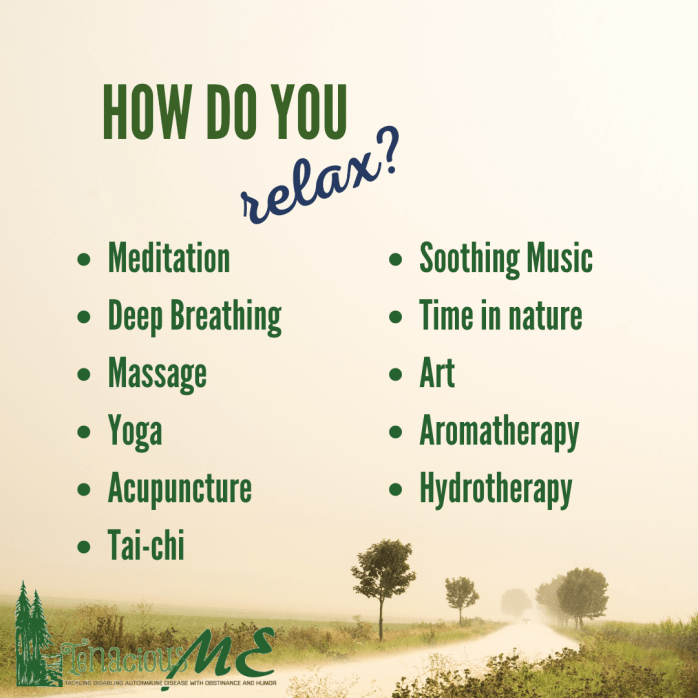
Luckily my stress management toolkit is jam packed. Breathing exercises, meditation, reading, and crafting are my go-to stress management techniques. Being more intentional about reserving time to calm my nervous system after what was an unavoidably stressful few months will get me in the right frame of mind to support myself with other loving behaviors. It will also help me stop reaching for soothing foods and quiet my racing mind so I can get some sleep at night. Because stress has been shown to increase inflammation, I also know stress reduction will help to bring the inflammation down.
Turning my focus to nutrition, I know that I have allowed some inflammatory comfort foods to slide back into my diet. I also know that the right foods will help me recover faster. Pulling back on the things I don’t need and being sure to include plenty of nutrient dense options will get me in a much better place all around. Eating well will also increase my energy level, making reaching my movement goals much more possible.
While I certainly have been moving enough the past few months, I haven’t been doing any targeted exercise. This has led to some areas being overworked and others being neglected. Rebuilding a routine of daily stretching and strengthening will help me get back in better shape. It will also hopefully provide some relief to the strained parts of me. Being mindful of the parts of me that are particularly unhappy will be key to sticking with the new routine. Building a routine that is more flexible than I am helps.
As I take the steps to reduce stress, nourish my body and support it with loving movement, the reduced inflammation and pain will certainly lead to more restful sleep. Until then, being mindful of my limits, taking naps and making rest a priority will help.
Getting back on track when life sends you off the rails is challenging, but it is a challenge that is well worth the effort. Shifting my time and energy to the things that I know help me feel well will open up more time and energy to do the things I want to do. Until then, making myself a priority will at least get me on the right track.
Like what you read? Show me some love, give it a like, share with a friend.

Chronic in a Crisis-

Getting through unexpected situations with chronic illness
When life suddenly hands us a crisis it can be a lot to handle, especially if you are already juggling chronic illness. Getting through the disaster without completely toppling your health can be a huge challenge when life turns upside down. Having a plan to manage your health during times of crisis just might help. Whether you see that sticky situation on the horizon or it has just landed in your lap, taking a little bit of time to plan to be as healthy as possible while you face it will leave everyone in better shape on the other end.
Step 1- Consider your most critical health needs and plan to meet them. This sounds like a no-brainer, obviously if you need certain things to stay alive, it will be important to keep doing them to keep being alive during a crisis. However, if you’ve ever been so stressed out you forgot to do things like eat and drink, you know that distraction can cause us to forget even our most basic biological needs. Making a plan that includes having the things you need packed and ready to roll out the door when necessary can mean the difference between having what you need to keep moving and adding to the situation with a health emergency of your own.
Step 2- Breathe. By far the simplest, cheapest, quickest tool in your arsenal, taking a few minutes to focus on breathing exercises can be a big game changer in times of extreme stress. Calming and centering, deep breathing exercises can slow your racing heart and quiet your frantic mind, allowing you to focus. Reducing the physiologic stress response also means less impact on stress aggravated chronic illnesses. Keeping the stress from overwhelming you with symptoms can be a huge help when life becomes chaotic.
Step 3- Get help. This is no time to be an island. Phone a friend, reach out to your family, let someone know you are in the middle of something big and could use some support. Have a list of things that you can use help taking care of when your focus must be elsewhere. When they ask what they can do to help, you will know what to ask for. Maybe the cat needs feeding, maybe you just need someone to remind you to eat something, consider the needs in your life you are likely to lose track of and plan to get help meeting them.
Step 4- Take good notes (or recruit a friend to record for you.) It is easy to become mentally overwhelmed during a crisis. If you happen to also struggle with memory issues and brain fog as part of your chronic illness, it tends to be worse when stress levels are higher. Taking notes or having someone there with you to keep track of the important details will make figuring out what action to take much easier. Keep a notebook or note-taking app in your emergency kit. Be sure to write down questions and ideas as they come to you so you can refer to them later.
Step 5- Make time to rest and recharge. Perhaps the most challenging part of crisis management with chronic illness, respecting your need to recharge is essential to getting through any situation in good shape. Chances are, whatever is happening has disrupted your normal routines. It is easy to become so involved in dealing with the new stress that you lose sleep. Sometimes it feels entirely out of our control. Thanks to our modern world, it usually isn’t. There are many different options to help achieve a restful sleep, even during a crisis. Whether you prefer pharmaceutical or more natural remedies there are things that can help your body and mind to get a bit of restoration, reach out to a trusted professional for guidance on what is appropriate for you.
6. Be gentle with yourself. Chronic illness doesn’t step aside for anything, certainly not because life is suddenly overwhelming you with stress. Be mindful of and respectful of your physical limits. Treat your body with kindness. Be forgiving of the unhelpful ways it may act up due to the stress and loss of routine. Show it a little love when you can. Take a walk while you phone a friend, sit and watch the birds in the tress for a few minutes on your way out the door, take time to enjoy something that soothes you. It is amazing what a tiny bit of self-love can do to help us through rough times.
Remember, this too shall pass. No crisis lasts forever. When you get to the other side (and you will get to the other side) the care you’ve taken will leave you feeling much less rundown. Reducing the impact on your health, reduces the amount of time you will need to bounce back from that challenging situation. In a body that makes up its own challenges, that can feel like a huge win.
Like what you read? Show me some love, give it a like, share with a friend.

Infection Frustration

Well, here I am again, putting off infusion because I’ve got an infection. If not for the fact that I just did that two weeks ago for a different infection, I might not be feeling so frustrated. But, here we are, frustration station once again. In the middle of February…while mother nature flings endless mixed-up weather our way. The past few weeks have had me wishing I was a migratory bird, or at least one of the critters who is smart enough to sleep through this mess. Unfortunately, my bank account won’t support my nomadic lifestyle dreams and I can hardly sleep through the night, let alone an entire season, so suffer through it is.
A common issue for folks with rheumatoid arthritis, especially those whose immune system has been turned down by biologics/DMARDS, infections are part of managing life with ra. Knowing it comes with the territory, of course does little to make one feel better about the situation, but it does help to be aware that they are indeed more likely to occur in patients like us. The sooner we notice an infection, the faster we can get medical intervention to get it under control. In a body that is preoccupied with attacking itself, with an immune system that is also suppressed, early intervention can mean the difference between clearing the infection quickly at home and a long stay in the hospital. As someone who loves her own space and hates hospital stays, I try to pay attention to my body and identify infection symptoms early.
Several years in on this treatment regimen and I have gotten used to the way my body reacts, including the types of infections it happens to be prone to. For me those are UTI’s, vaginal infections and sinus infections, and often, as now, one follows treatment of the other. Likely a cascade effect as the first antibiotic treatment knocks down beneficial bacteria, leaving the door open for the next nasty bunch to come along. Had I been a bit more vigilant about replacing the good bacteria, I might not be in this situation. Then again, as out of balance as my body has been the past few months, there may have also been no stopping this train. Some things are inevitable with any chronic illness. Going off meds because you have an infection, happens to be one of those things for many rheumatoid patients.
With a bit of luck and a boatload of antibiotics, this will hopefully clear up quickly so I can get back on track and calm my rheumatoid symptoms. Until then, I’ll be praying for mild weather and upping the self-care game to keep my body as happy as possible. Thankfully, my ra toolbox is packed with remedies and relief, some of which you can find in 10 Tried and True Natural Pain Remedies.
Do you struggle with frequent infections? What are your tips and tricks for getting over them fast? What do you turn to for relief when your normal routine is off the table? Please share in the comments, we can learn so much from each other!
(Before I finished editing this post, I caught yet another cold!! Please, send me all the good juju that I kick it quickly with no infections to follow!)
Like what you read? Show me some love, give it a like, share with a friend.

We Made It! (a holiday recovery plan)

Is it just me or was the holiday season we just slid through a bit on the challenging side this time around? Everyone I talk to seems to say the same, chaos and confusion were the theme of the season. The theme of my entire December, if I’m honest. The result of all the extra challenges? Stress, pain, and exhaustion. I don’t know about all of you, but I feel like I need a vacation to recover from the entire fiasco. One without any chance of travel delays, breakdowns or problems to solve. Someplace warm and weather free. Since that is clearly a fantasy, I’ll have to settle for recovering at home, problems and all.
Starting with, getting some rest. Having done everything I planned and a load of stuff that had to be done, I am beat! Completely and thoroughly physically exhausted. Bone deep tired. Naps and early bedtimes will definitely be a theme for me this week. As will asking for help with the things that have to happen and letting go of the things that don’t. Anyone bothered by our half decorated disaster is welcome to tidy it up, this maid is taking a break.
Using some of the time and energy saved not folding laundry, I can focus on managing the stress of being in my life. Taking some time to sink into a good book, binge a great show, listen to some tunes and create something just for fun are all definitely on my to do list this week. Adding in some more intentional stress management like breathing exercises and journaling should get me back to a normal, able to cope level of stress.
The rest and stress management will both help calm my immune system down and with it, the pain. Meanwhile, my heating pad and I will be spending alot of quality time together, right after I dip my entire body in cannabis salve. Rounding out my pain management plan with cannabis flower should keep my pain quiet enough for resting (and help with the creating of fun art!)
Taking a few days to focus on those three things will have me feeling better, faster than pushing through and ignoring it ever did. What helps you get back on track when life as run you over?


 Tenacious ME