
Tenacious ME
Tackling disabling autoimmune disease with obstinance and humor.
My Tiny Craft Obsession
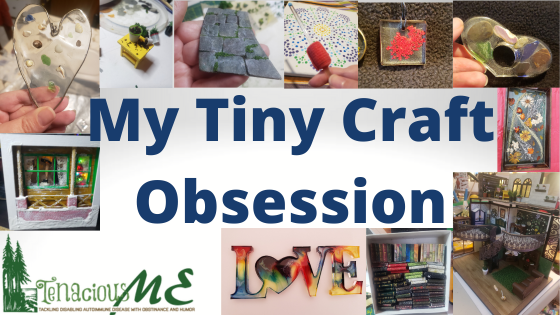
If you follow me on social media, you may have noticed I’ve got a small hobby I share from time to time. Creative by nature, I have enjoyed crafting for as long as I can remember. Some of my earliest memories are sewing lessons with my mom and the endless hours I spent making finger crochet chains, though I can’t recall who taught me to create those. As I got older, I dabbled in many different types of crafting, from fiber arts like weaving and macrame to beaded jewelry and wire wrapping. After being diagnosed with rheumatoid arthritis, I set that aside for quite some time. After all, when you barely have time and energy to keep up with taking care of yourself, let alone your family, sitting down to create something feels like a selfish waste of time. Besides, most of my craft hobbies had become challenging, and I was blaming them for helping me ruin my hands at the time. All that beading, crocheting, loom knitting, hand sewing…couldn’t have been good for me, right? Well…it turns out, yes but no.
The fact is, there are some crafts I probably cannot do. Things that require a large amount of hand strength are always going to be hard because I just don’t have very strong hands. Spending big chunks of time hunched over a project will always do me more harm than good because I can’t sit and do something for long chunks of time, especially not something that puts me in a challenging posture. Giving away all of my crochet hooks and yarn though, a bit of an overreaction. I would come to find that I can and should crochet. For short chunks of time, with frequent stretch breaks. Using chunky handled crochet hooks, I began making my own fingerless gloves and washable cane handle covers.
Slowly, I started considering the other things I might do. By now officially disabled, years into walking this new path, I’d learned a lot about managing my disease. The importance of living a full life no matter what that looks like. How vital it is to seek those sparks of joy; the world becomes terribly dark without them. Creating lights me up. It gives my brain and body an outlet. Done right, I’ve found it wonderfully therapeutic, both mentally and physically. The key for me has been mostly in pacing. In taking small bites out of a project instead of finishing it in one day. It is no surprise that I’ve found my niche in crafts with built in pacing, resin art and miniatures. The resin must cure. The paint or glue has to dry. Most steps are quickly done and then, there is some waiting. Perfect time for a stretch break. Excellent window for a quick chore and some bigger body movement while I wait to do the next coat of paint.
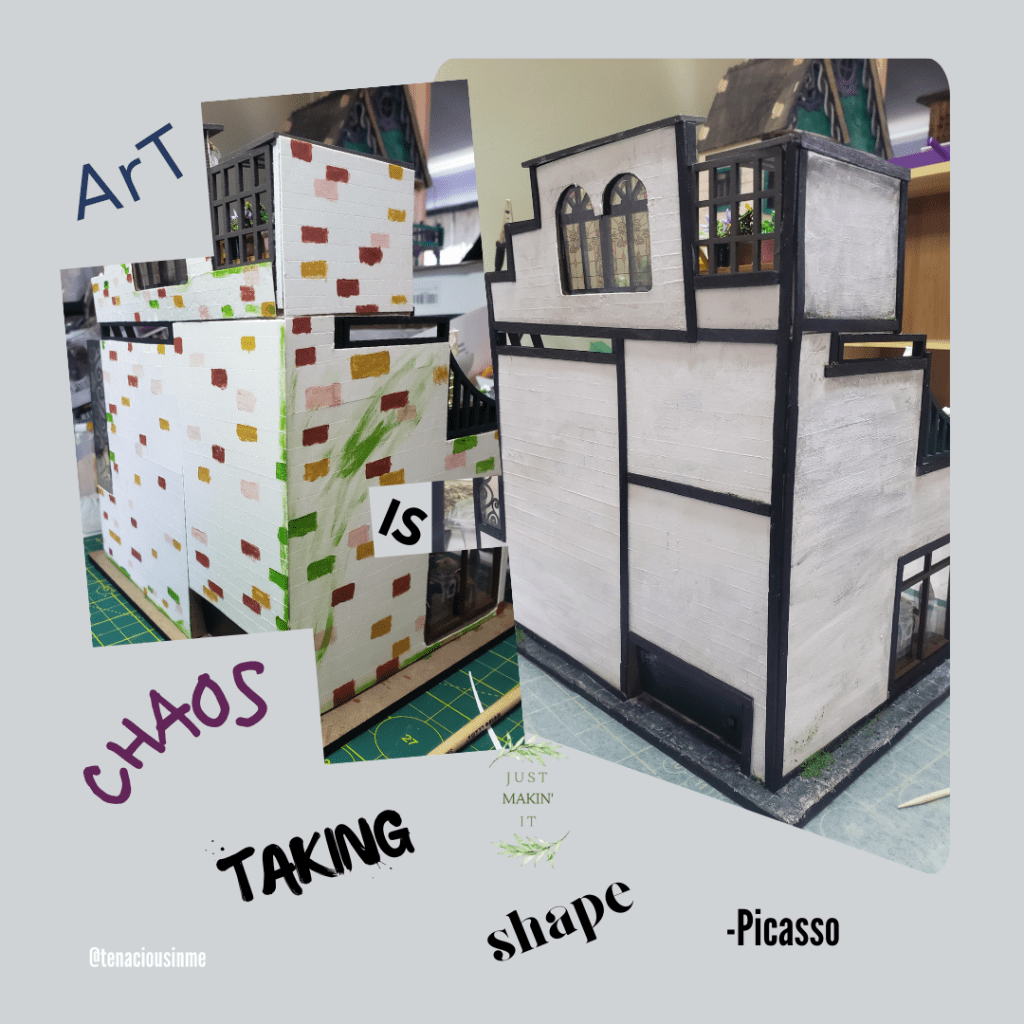
It turns out, creating tiny worlds is something I’m very capable of. I can turn a pile of trash into something really surprising. Applying my love of design and construction on such a small scale makes it doable for me. Building a cabinet may be too much for me to tackle, building a 2-inch-tall cabinet isn’t. These miniature creations also allow me to use a wide variety of skills and art mediums. The variety not only keeps me entertained, but it also makes it easier for me to accomplish as I’m not spending long chunks of time doing any one thing. Sculpting, painting, cutting, fabric arts, having a wide variety of things to do means I can switch between them and avoid repetitive stress, something my body has no tolerance for.

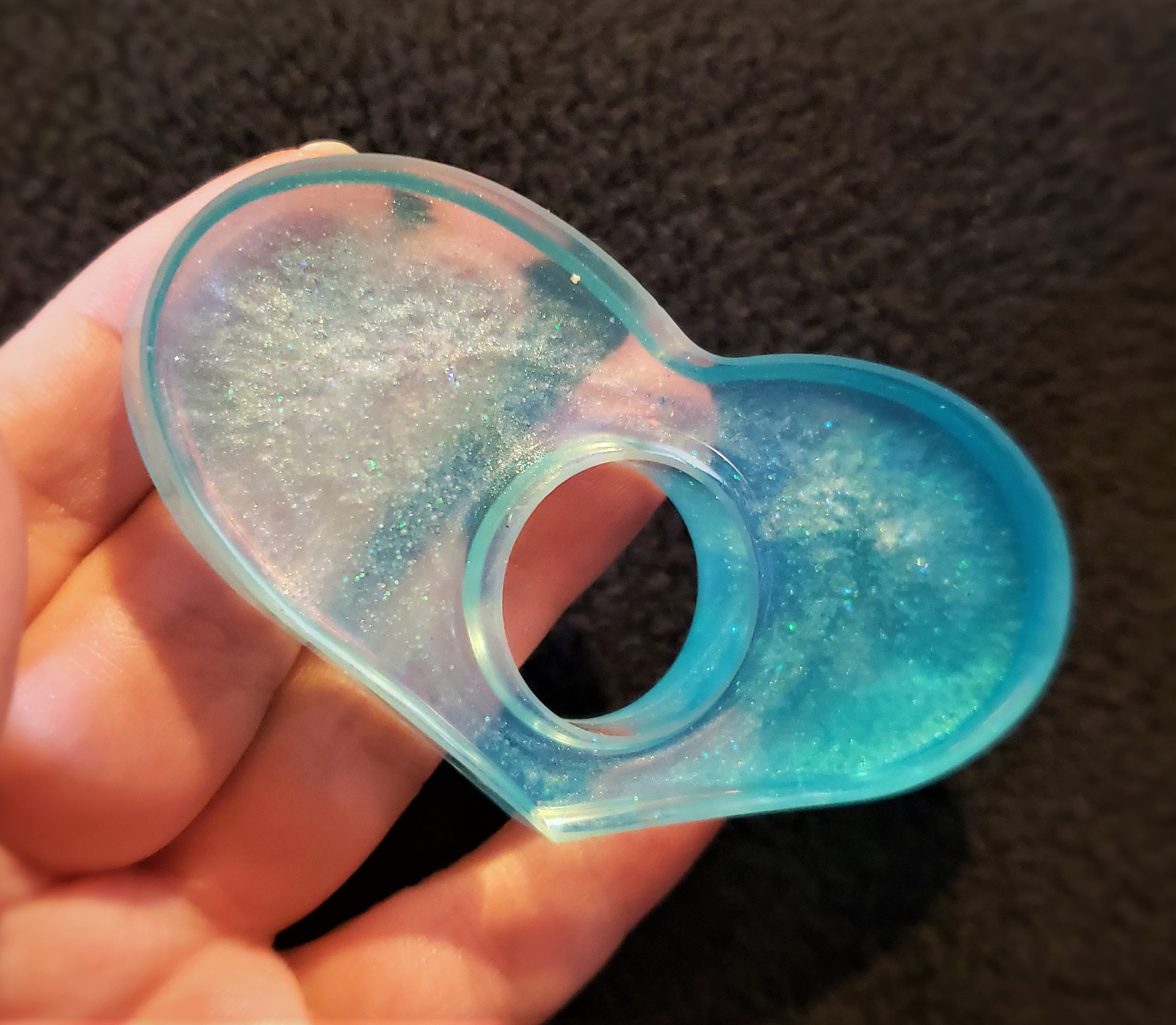

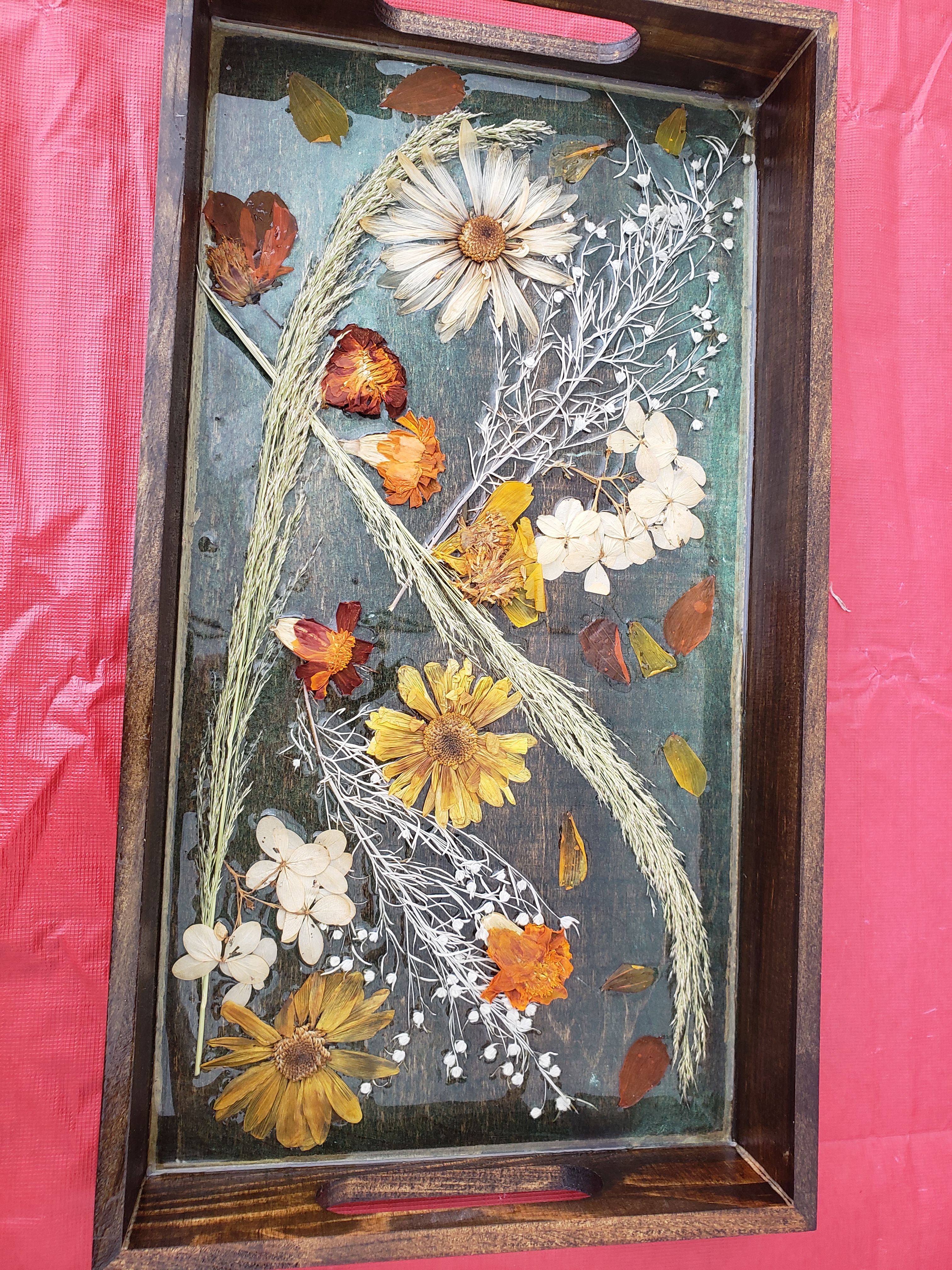
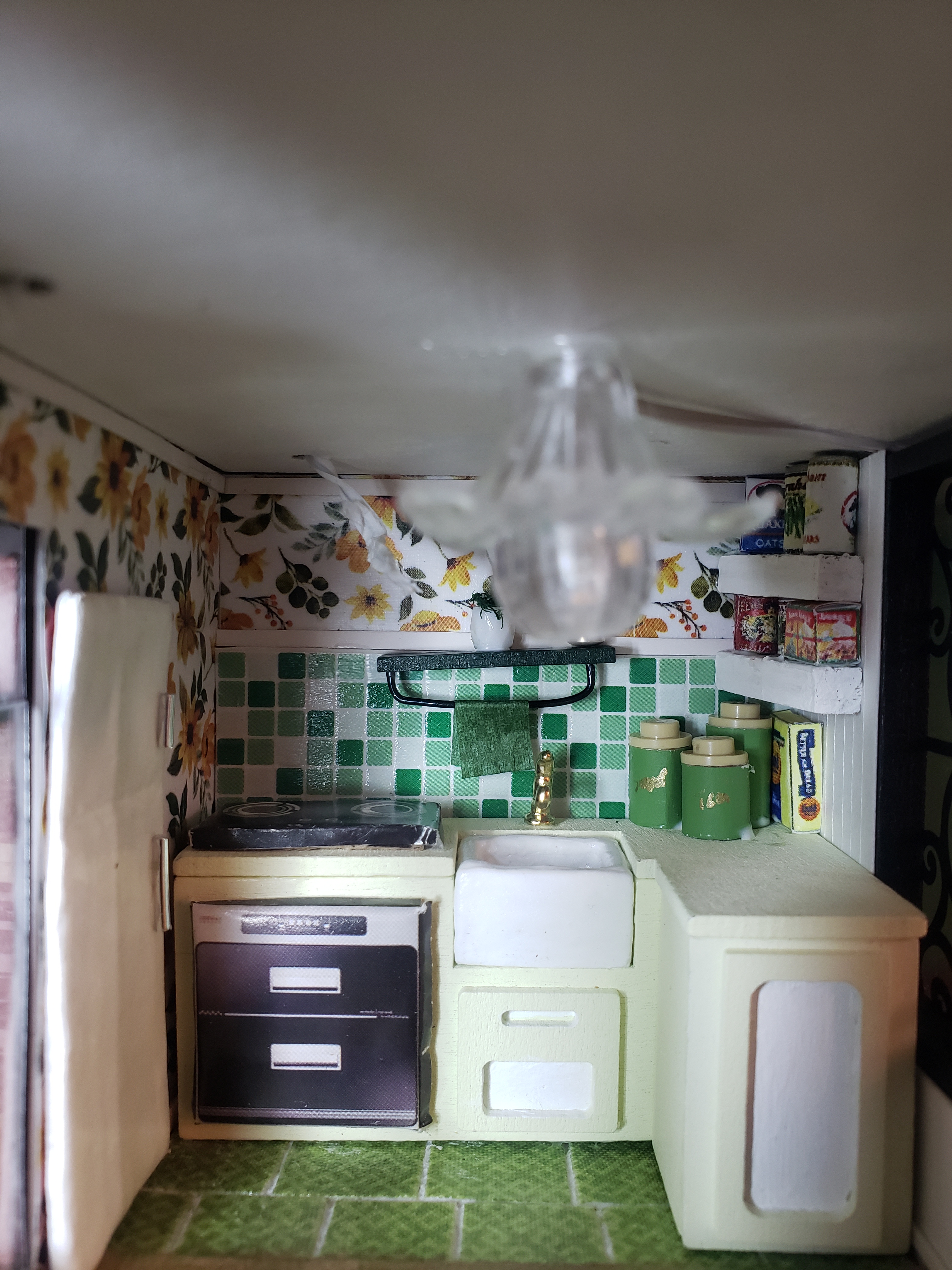
Spending precious resources, time and energy, on something that I enjoy no longer feels selfish. It feels therapeutic. Crafting challenges my dexterity and helps me maintain both strength and mobility. Creating allows me to escape, to sink into a world of imagination, to breathe life into something I see in my mind.
Have a hobby that helps you escape or makes your life with a chronic illness more bearable? Tell us about it in the comments, we’d love to hear your story!
Want to support my tiny craft obsession? Check out my Etsy shop, Just Makin It In Maine, for some cute handmade crafts.


 Tenacious ME